
When The Veterans Retire, The Equipment Has To Know More
As experienced operators leave faster than they can be replaced, the burden of competence is shifting from the crew to the machine.
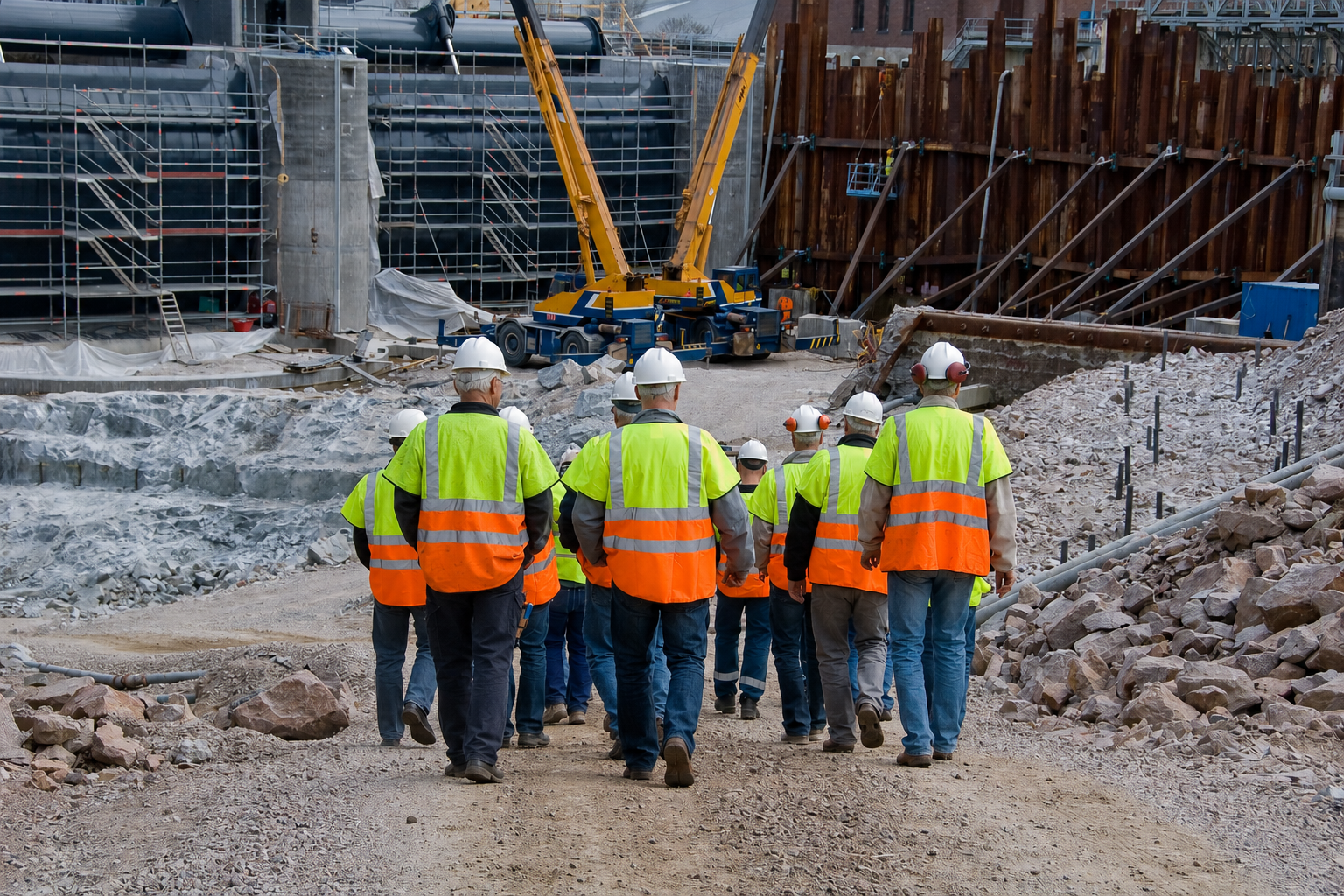
On an industrial job site, the operator with decades of accumulated judgment about how a particular truck behaves, what a normal pressure reading sounds like, is increasingly the hardest person to hire. That kind of expertise is thinning out across the industrial equipment sector — and the contractors and municipalities buying trucks and machines know it.
The numbers are blunt. According to a 2026 analysis by K2 Staffing, the average equipment operator is 47 years old, and 28 percent of the current workforce is eligible to retire within five years — a wave that could pull roughly 120,000 experienced operators out of the market by 2028. Replacing them is already hard: the same analysis reports that 87 percent of contractors have difficulty finding qualified operators, up from 68 percent three years earlier, and cites Associated General Contractors data showing the time to fill a critical operator role has stretched to 45 days, from 23 days in 2019.
The Knowledge Leaves Before the Seat is Empty
The harder problem isn’t the headcount — it’s what walks out with each person. Much of what a veteran operator knows never makes it into a manual: emergency troubleshooting, the sounds a machine makes that indicates something’s wrong, the workarounds that keep legacy equipment running.
As K2 puts it, senior operators don't just run equipment; they troubleshoot problems, mentor younger workers, and make the judgment calls that prevent costly mistakes. That experience can't be backfilled on a two-week notice. K2 estimates it takes two to three years to train a competent operator and five to seven to develop the expertise to handle complex work safely. Meanwhile the pipeline feeding the trade is shrinking: enrollment in heavy-equipment operation programs has fallen 40 percent over the past decade, according to the same report.
The Next Operators are More Digital Than Ever
The people filling those roles bring a different relationship to technology. The incoming workforce skews toward digital natives — more comfortable with a screen than with years of accumulated feel for a particular pump or valve. That’s not a lesser operator; it’s a different one. But it does mean the equipment can no longer assume the person running it has spent twenty years learning its tells.
The shift reaches management too. Black & Veatch found the most-impacted job category flipped in 2024, with 86 percent of respondents citing management or supervisors as most affected by departures — ahead of operators at 82 percent and engineers at 60 percent. The experienced people who used to translate between the shop floor and the equipment are thinning out at the same time.
What this means for the people who build the equipment
For an OEM, the takeaway is concrete: the machine now has to supply what the experienced operator used to. A control layout that rewards expert pattern recognition becomes a liability when the person at the panel started six months ago. Ease of use has shifted from a selling point to a purchasing requirement — Trenchless Technology notes that features like one-button operation, hydraulics in place of a transfer case, enhanced failsafes, and simplified maintenance are becoming a "must have" rather than a "nice to have" when contractors are trying to attract and keep operators.
Control Simplicity Becomes a Specification
For product and engineering teams, the first consequence is in the interface. Controls built around the assumption of an expert hand, dense panels, unlabeled functions, sequences learned by repetition, become liabilities when the operator is new. The design pressure is toward fewer ways to make a costly mistake: guarded functions, sensible defaults, feedback that tells the operator what the machine is doing and why.
Condition assessment and diagnostics, prominent themes at the 2026 WWETT Show alongside robotics and AI-equipped inspection tools, point the same direction. A machine that surfaces its own status reduces what a green crew has to infer. The goal is to move knowledge that used to live in a veteran's head into the equipment's behavior and its readouts.
Remote operation and the safety case
Thinner crews also change the calculus on where the operator stands. With fewer experienced hands to manage the area around a running machine, keeping the operator out of the trench, away from the confined space, and clear of the line of fire is both a safety measure and a practical necessity. Remote and wireless operation lets a single worker reposition for the best sightline rather than being tethered to a fixed control point.
The argument is not only about injury prevention, though that matters most. A new operator who can see the work clearly makes fewer mistakes, and fewer mistakes protect the equipment and the schedule. For OEMs, designing for remote operation is increasingly a way to make a machine forgiving of inexperience.
Shorten the Path to Competence
Mike Renner of McCallister Machinery describes one-button engagement — "you can't screw that up" — that lets an operator go from the cab to digging in 30 seconds, which matters when a crew has 12 to 20 potholes to hit in a day. Dan Coley, director of truck products at Brandt Industries, frames the same feature in terms of learning: easy operation frees a new operator's "mind space" to learn the craft — soil conditions, nozzle selection — and to stay aware of hazards like overhead lines and buried utilities.
Build the Guardrails
The most useful failsafes assume a less-experienced hand on the controls. Password-protected pressure limits keep a setting from being pushed past safe. A hydraulic shutoff at full working capacity simply stops flow instead of damaging the machine. Designing for the mistake a green operator is likely to make protects both the equipment and the utilities around it.
Retention is Gold
Finally, treat retention as a spec. Reduce turnover and you raise productivity, improve safety, and build a more satisfied customer base. Put another way, a machine that works for the operator is a machine that works for the company. When ease of operation keeps crews on the job, the equipment itself becomes a workforce tool — and buyers are starting to evaluate it that way.
These are the design conversation the operator shortage is starting, whether it's named that way in a purchase order. K2 notes that contractors are already leaning on remote operation and GPS-guided, automated controls that "reduce the skill threshold," letting less-experienced operators achieve precision results that once took years to master. The OEMs who read the shift early — who treat "a new operator can run this safely on day one" as a design requirement rather than an afterthought — will be building for the workforce of the future.
The AARCOMM advantage
At Aarcomm, this is the problem our wireless remote controls are built around: putting intuitive, responsive control of heavy equipment directly in the operator's hands, reducing time to competence and keeping that operator at a safer distance from the machine. As the experience behind the controls turns over, lowering the barrier to safe, confident operation isn’t just a feature we add. It’s the reason we exist. See how our remotes are built for the operators of today.
LEARN MORE CONTACT US